
How Can Beginners Practice Chakra Self Healing at Home?
How Can Beginners Practice Chakra Self Healing at Home?
Beginners can practice chakra self-healing at home by combining simple mindfulness exercises, visualization, breathwork, and affirmations focused on the seven chakras. Start with a quiet space, learn basic chakra concepts, and follow guided steps to balance energy centers and promote well-being. With consistency, these techniques can help boost relaxation, self-awareness, and overall health.
What Is Chakra Self Healing?
Chakra Self Healing Definition:
Chakra self-healing is a holistic self-care practice where individuals use meditation, mindfulness, and energy-focused techniques to cleanse and balance their seven primary chakras—energy centers connected to physical, emotional, and spiritual health.
What Are Chakras and Their Functions?
Chakra
Location
Main Function
Associated Color
Root (Muladhara)
Base of the spine
Stability, security, grounding
Red
Sacral (Svadhisthana)
Below the navel
Creativity, pleasure, emotions
Orange
Solar Plexus (Manipura)
Stomach area
Confidence, power, self-esteem
Yellow
Heart (Anahata)
Center of chest
Love, compassion, relationships
Green
Throat (Vishuddha)
Throat
Communication, truth, expression
Blue
Third Eye (Ajna)
Between eyebrows
Intuition, insight, imagination
Indigo
Crown (Sahasrara)
Top of the head
Spiritual connection, awareness
Violet/White
How Can I Start Chakra Self Healing at Home?
Many beginners ask, “How do I open my chakras at home?” or “What’s the best way to balance my energy centers by myself?” Here’s a step-by-step guide tailored for those new to chakra self-healing:
Step-by-Step Chakra Self Healing Routine
Set Your Intention:
Find a quiet, comfortable space with minimal distractions.
Decide which chakra(s) you want to focus on or choose a full-body scan.
Practice Grounding:
Sit or lie down in a relaxed position.
Take a few slow, deep breaths. Feel the connection between your body and the ground.
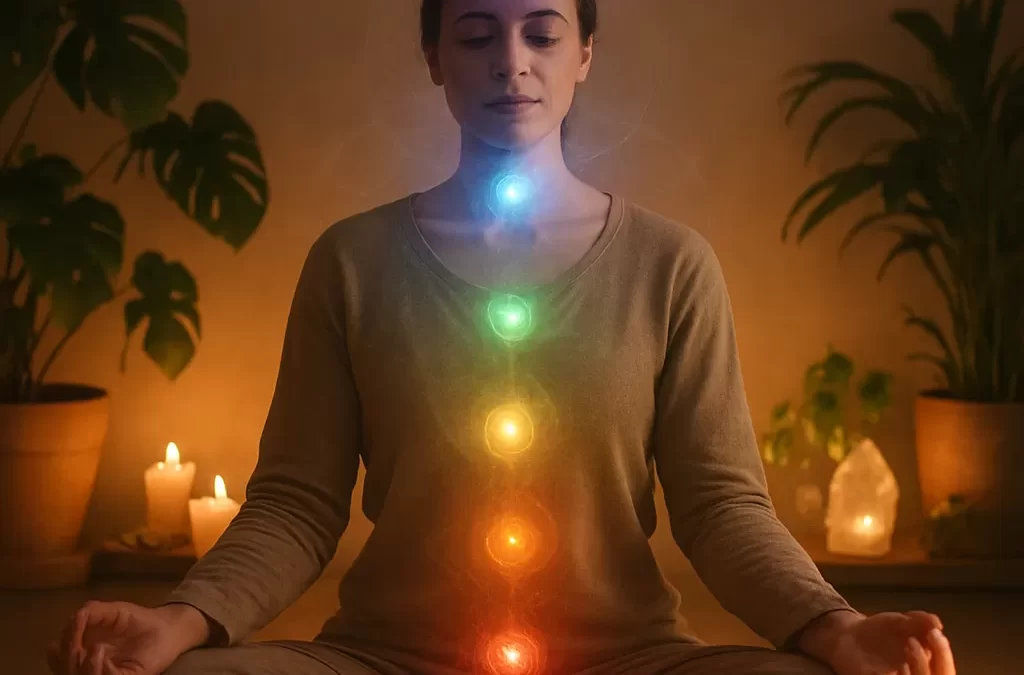
Visualize Each Chakra:
Mentally scan from root to crown (or focus on a specific chakra).
Imagine a glowing ball of light in the chakra’s associated color.
See this energy spinning, clearing blockages, and radiating warmth.
Repeat Affirmations:
Silently or aloud, use affirmations linked to each chakra.
(e.g., “I am grounded and safe” for Root, “I speak my truth” for Throat.)
Use Breathwork:
As you focus on each chakra, inhale deeply, visualizing energy flowing in.
Exhale and imagine negativity or blockages flowing out.
End With Gratitude:
Thank yourself for the time spent on self-care.
Observe any changes in mood or physical sensations.
What Tools and Techniques Can Beginners Use?
Guided Meditations: Listen to chakra balancing meditations on YouTube or wellness apps.
Chakra Affirmations: Use positive statements specific to each energy center.
Journaling: Reflect on emotions and physical sensations noted during practice.
Sound Healing: Try listening to chakra-aligned frequencies like singing bowls or tones.
Crystal Placement (Optional): Place colored crystals (e.g., amethyst, citrine) on or near chakras while meditating.
Color Visualization: Imagine the color associated with each chakra enveloping that area of your body.
Which Chakras Should Beginners Focus On First?
Many practitioners recommend starting with the lower chakras—Root, Sacral, and Solar Plexus—because they form the foundation of your energy system. A balanced base supports emotional stability, confidence, and a sense of safety, making it easier to progress to higher chakras.
Common Mistakes Beginners Make with Chakra Healing
Skipping the basics: Not learning chakra meanings and functions first.
Trying to force results: Healing is a gentle, gradual process.
Neglecting self-care: Diet, sleep, and stress can impact chakra health.
Ignoring physical sensations: Mind-body awareness is key to detecting imbalances.
Lack of consistency: Regular practice amplifies benefits and deepens awareness.
How Often Should You Practice Chakra Self Healing?
Beginners can start with 10-15 minute sessions, 2-3 times per week, then increase frequency as comfort grows. Daily brief check-ins and mindfulness exercises are also helpful for gradual chakra balancing.
What Are Signs of Chakra Imbalance or Blockage?
Chakra
Physical Indicators
Emotional/Spiritual Signs
Root
Fatigue, low immunity, leg pain
Anxiety, insecurity, restlessness
Sacral
Lower back pain, reproductive issues
Creativity blocks, guilt, emotional numbness
Solar Plexus
Digestive problems, weak willpower
Low self-esteem, frustration, indecisiveness
Heart
Chest pain, circulation issues
Loneliness, bitterness, jealousy
Throat
Sore throat, thyroid issues
Trouble expressing yourself, fear of speaking
Third Eye
Headaches, eye strain
Poor intuition, confusion, lack of focus
Crown
Sleep issues, headaches
Disconnection, lack of meaning, apathy
FAQ: Chakra Self Healing for Beginners
1. Can I practice chakra healing even if I’m not spiritual?
Yes, chakra self-healing is accessible to anyone interested in mindfulness, self-reflection, and personal growth, regardless of spiritual beliefs.
2. Are there any risks to practicing chakra healing at home?
Chakra healing is considered safe when practiced gently, but it should not replace medical treatment for physical or mental health concerns.
3. How long does it take to notice results from chakra self healing?
Many people feel more relaxed or focused after just one session, but deeper energetic balance often develops with consistent practice over weeks or months.
4. What if I feel discomfort or strong emotions during chakra healing?
Emotional releases can be part of the process; if discomfort becomes overwhelming, take a break and consider consulting a holistic healer or counselor.
5. Do I need special equipment or tools to get started?
No special tools are required—just a quiet space and an open mindset. Optional aids like music, crystals, or guided audio meditations can enhance the experience.
6. Is there a best time of day for chakra self healing?
The best time is when you can practice without interruptions—many find mornings or evenings particularly grounding and peaceful.
7. Can chakra healing help with anxiety and stress?
Chakra-focused mindfulness often helps reduce stress and anxiety by promoting relaxation and emotional balance, making it a supportive self-care tool.
Summary: Key Takeaways for Beginners
Chakra self-healing is a simple, at-home method for supporting emotional and physical wellness.
Start with basic grounding, mindfulness, and visualization techniques.
Work from the lower chakras upward and practice consistently for best results.
Tools like affirmations, sound healing, and crystals can enhance (but aren’t required for) your practice.
Listen to your body, be patient with progress, and seek professional advice when needed.
“`
Leave a Reply