
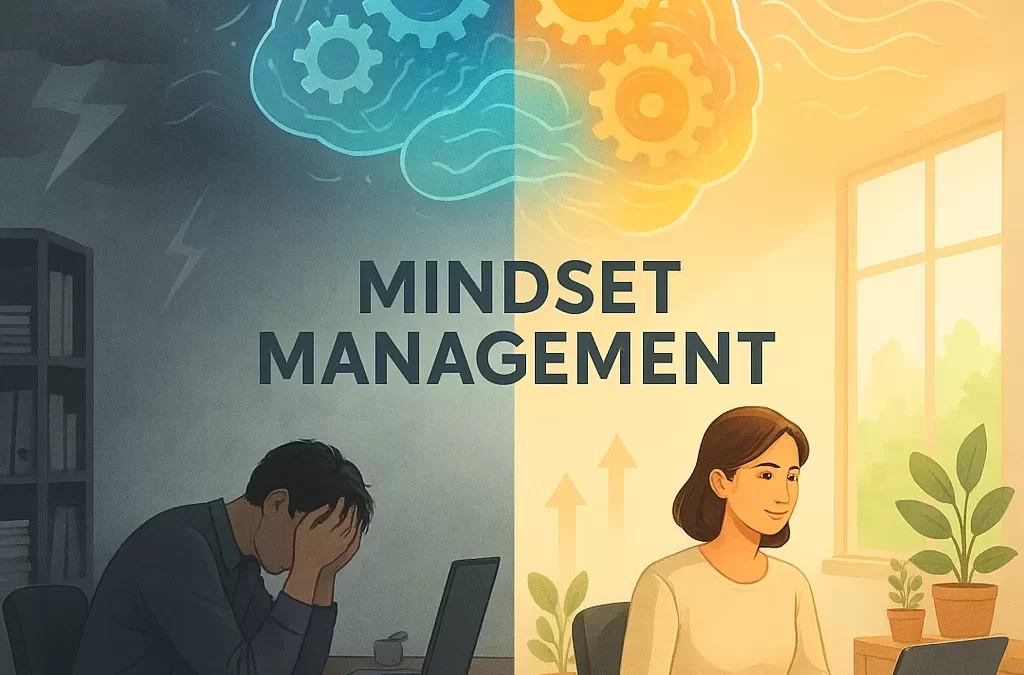
How Can Effective Mindset Management Improve Your Personal and Professional Life?
Effective mindset management can significantly enhance both your personal and professional life by fostering resilience, improving problem-solving skills, and enabling you to adapt positively to challenges. By intentionally cultivating a growth mindset, you become more open to learning, collaboration, and self-improvement, which directly translates into higher productivity, well-being, and satisfaction.
What Does Effective Mindset Management Mean?
Definition: Mindset management is the practice of consciously observing, guiding, and adjusting your patterns of thinking/attitude to optimize outcomes in diverse aspects of life, including work, relationships, and personal growth.
Entity: Mindset (growth mindset, fixed mindset)
Related Concepts: Resilience, self-awareness, adaptability, motivation
Applications: Leadership, teamwork, goal achievement, stress management
How Does Mindset Affect Your Personal and Professional Life?
Your mindset—defined by core beliefs and attitudes—influences how you approach challenges, interact with others, and pursue goals. Both in your personal and professional environments, the right mindset can act as a catalyst for positive change, while a negative or fixed mindset can hinder growth and satisfaction.
What Are the Different Types of Mindsets?
Type of Mindset
Characteristics
Entities
Growth Mindset
Belief in ability to develop through effort; embraces challenges
Carol Dweck, Self-Improvement
Fixed Mindset
Belief that abilities are static and unchangeable
Limiting Beliefs, Fear of Failure
Positive Mindset
Optimistic outlook; focuses on possibilities and solutions
Optimism, Self-Efficacy
Negative Mindset
Pessimism, self-doubt, and focus on obstacles
Negative Self-Talk, Learned Helplessness
What Are the Benefits of Effective Mindset Management?
Increases Resilience: People with managed mindsets bounce back from setbacks and stress more quickly.
Boosts Motivation: Fostering a growth mindset fuels intrinsic motivation, helping you pursue long-term goals.
Improves Relationships: Positive attitudes enhance communication, empathy, and teamwork.
Enhances Problem-Solving: Mindset management leads to more creative, adaptive solutions to obstacles.
Fosters Learning and Productivity: Being open to feedback and learning results in greater personal and professional development.
How to Practice Mindset Management Daily?
Integrating mindset management into your routines can yield transformative results. Here’s a simple daily approach:
Self-Reflection: Regularly assess thoughts and feelings, identifying limiting beliefs (self-awareness).
Reframe Challenges: See setbacks as opportunities for learning (cognitive reframing).
Set Growth Goals: Focus on learning and incremental improvement, not just results.
Practice Gratitude: Cultivate appreciation even in adversity to nurture optimism.
Seek Feedback: Request and act on input from others to encourage continuous development.
How Can Mindset Management Improve Work Performance?
In the workplace, mindset management is closely linked with leadership, employee engagement, and innovation. Leaders who model a growth mindset inspire teams, increase job satisfaction, and foster collaboration.
Boosts Adaptability: Workers with positive mindsets more effectively cope with change (organizational resilience).
Enhances Leadership: Effective leaders leverage mindset management to drive motivation and trust.
Reduces Burnout: Employees who manage their mindset experience less stress and higher retention.
Promotes Innovation: Teams are more likely to suggest and implement creative solutions.
How Does Mindset Management Affect Personal Well-Being?
Mindset management is vital to mental wellness. Studies show that cultivating positive thinking habits reduces anxiety, increases emotional intelligence, and improves overall life satisfaction (entities: mindfulness, self-compassion).
Supports Goal Achievement: Believing in your ability to change increases persistence.
Improves Relationships: Positivity leads to healthier communication patterns and empathy.
Strengthens Self-Confidence: Self-belief reinforces effective decision-making and assertiveness.
What Are Common Questions about Mindset Management?
Why is understanding your mindset important?
Being aware of your mindset helps you recognize self-imposed limitations and transform negative thinking patterns, unlocking personal and professional potential.
Can mindset really be changed?
Yes, research led by psychologist Carol Dweck demonstrates that mindset is malleable; with conscious effort and consistent practice, anyone can shift from a fixed to a growth mindset.
What tools help with mindset management?
Journaling for self-reflection
Mindfulness and meditation apps (e.g., Headspace, Calm)
Goal-setting frameworks (SMART goals)
Coaching and mentorship
Are there any risks or challenges?
Mindset management requires sustained effort. Over-optimism can lead to unrealistic expectations, while unaddressed negative thinking can undermine progress.
How does mindset relate to emotional intelligence?
Emotional intelligence and mindset are intertwined; people with growth mindsets are more likely to embrace emotional challenges and manage relationships effectively.
What is the impact of mindset on teamwork?
A team with shared growth mindsets collaborates better, learns from failures, and reaches higher collective achievements.
Key Takeaways: How to Start Managing Your Mindset Today
Recognize your default mindset in various daily situations.
Challenge and reframe negative or limiting thoughts.
Commit to learning and development across life domains.
Engage with resources and supportive people who encourage growth.
FAQ: Effective Mindset Management
1. What is the fastest way to shift into a growth mindset?
The quickest way is to recognize fixed or negative thoughts and consciously replace them with empowering beliefs by focusing on learning opportunities and progress.
2. How does mindset management help with stress?
Mindset management enables you to view stress as a growth challenge rather than a threat, which reduces anxiety and promotes strategic coping.
3. Can effective mindset management help with career advancement?
Yes, employees with growth and positive mindsets are more likely to embrace challenges, seek feedback, and demonstrate leadership—qualities often rewarded in career progression.
4. What’s the difference between mindset management and positive thinking?
While positive thinking focuses on optimism, mindset management encompasses self-awareness, ongoing learning, and proactive adaptation to both positive and negative events.
5. Are there books or resources to learn more?
“Mindset: The New Psychology of Success” – Carol Dweck
“Atomic Habits” – James Clear
TED Talks on growth and resilience
6. How long does it take to see results from mindset management?
Many people notice improvements within a few weeks, but lasting results require consistent practice and reflection over several months.
7. How can leaders promote mindset management in their teams?
Leaders can model growth-oriented thinking, encourage safe learning environments, and recognize effort as much as achievement to inspire a culture of continual growth.
“`

Leave a Reply